
For most of the creator economy's history, brands paid creators for access to their audiences, borrowed their credibility for a campaign, and moved on. That model hasn't disappeared, but investors and acquirers are now paying for companies that build products, intellectual property, and experiences around creator audiences.
These businesses begin with attention and trust already in place. But an established audience doesn't always guarantee an established customer base.
Inside OBSN's $400 Million Creator Economy Bet
In September, Steven Bartlett's holding company, Steven.com, and Authentic Brands Group launched OBSN, short for Obsession. The partners aim to deploy up to $400 million into creator-led businesses over the coming years, although that figure is a target rather than a closed fund.
The venture combines Steven.com's media, technology, and audience growth capabilities with Authentic's experience in product development, licensing, and global distribution. Authentic's portfolio includes Reebok, Champion, and Sports Illustrated.
Creators know how to build audiences, but turning those audiences into lasting businesses requires manufacturing, retail relationships, and distribution infrastructure.
Where Investors Are Putting Their Money
OBSN follows several years of investment in creator-led companies. The transactions range from funding rounds to acquisitions, reflecting growing investor interest in businesses built around established audiences.
Rhode: Hailey Bieber's skincare company was acquired by e.l.f. Beauty for up to $1 billion, including a $200 million performance-based earnout, in a deal completed in August 2025.
First We Feast: The company behind Hot Ones was purchased from BuzzFeed for $82.5 million in December 2024 by a group including founder Chris Schonberger, host Sean Evans, and Soros Fund Management.
Dude Perfect: The sports and comedy group secured more than $100 million from Highmount Capital in April 2024, its first outside investment.
Beast Industries: MrBeast's holding company, which includes Feastables, reportedly raised $300 million in 2024 in a round led by Alpha Wave Global, valuing the company at approximately $5 billion.
The categories differ, from skincare to entertainment and chocolate. But the business model is similar, with an established media presence attracting an audience and a commercial operation developing products and experiences around it.
Some have already demonstrated substantial demand. Feastables generated approximately $250 million in sales and more than $20 million in profit in 2024, according to reported financial information. Rhode recorded $212 million in net sales in the 12 months preceding its acquisition.
Why Creator Audience Size Doesn't Guarantee Sales
Those numbers help explain the investor interest, but they don't mean every creator with a large following can build a successful business.
Authentic founder Jamie Salter has acknowledged this. Before backing creators through OBSN, the partners evaluate whether their audiences can convert into customers. Follower counts reveal how many people are watching. They say less about purchasing behavior, category interests, and whether customers will return after an initial purchase.
Prime Hydration illustrates the risk. Logan Paul and KSI launched the drink in 2022, and their audiences helped generate extraordinary early demand. Prime became the UK's fastest-growing food and drink brand in 2023.
But sustaining that momentum proved difficult. UK revenue fell more than 70% in 2024, while U.S. sales declined 42% year over year by July 2025, according to Circana data cited by journalist Darren Rovell.
Prime remains an established business, and its early success exceeded what most beverage launches achieve. But its trajectory illustrates the difference between attracting first-time buyers and sustaining repeat purchases.
What Dude Perfect Reveals About Audience Behavior
Dude Perfect began posting trick-shot videos in 2009 and has since expanded into live tours, consumer products, and entertainment partnerships. In October, Disney announced a company-wide creative partnership with the group spanning entertainment, sports, consumer products, and experiences. Its 2026 tour drew more than 180,000 fans across 22 arenas.
When we used our AI-driven platform to profile Dude Perfect's audience, it identified five distinct segments, including competitive teens recreating trick shots, families watching together, aspiring content creators, humor-first viewers, and adventure-minded fans.
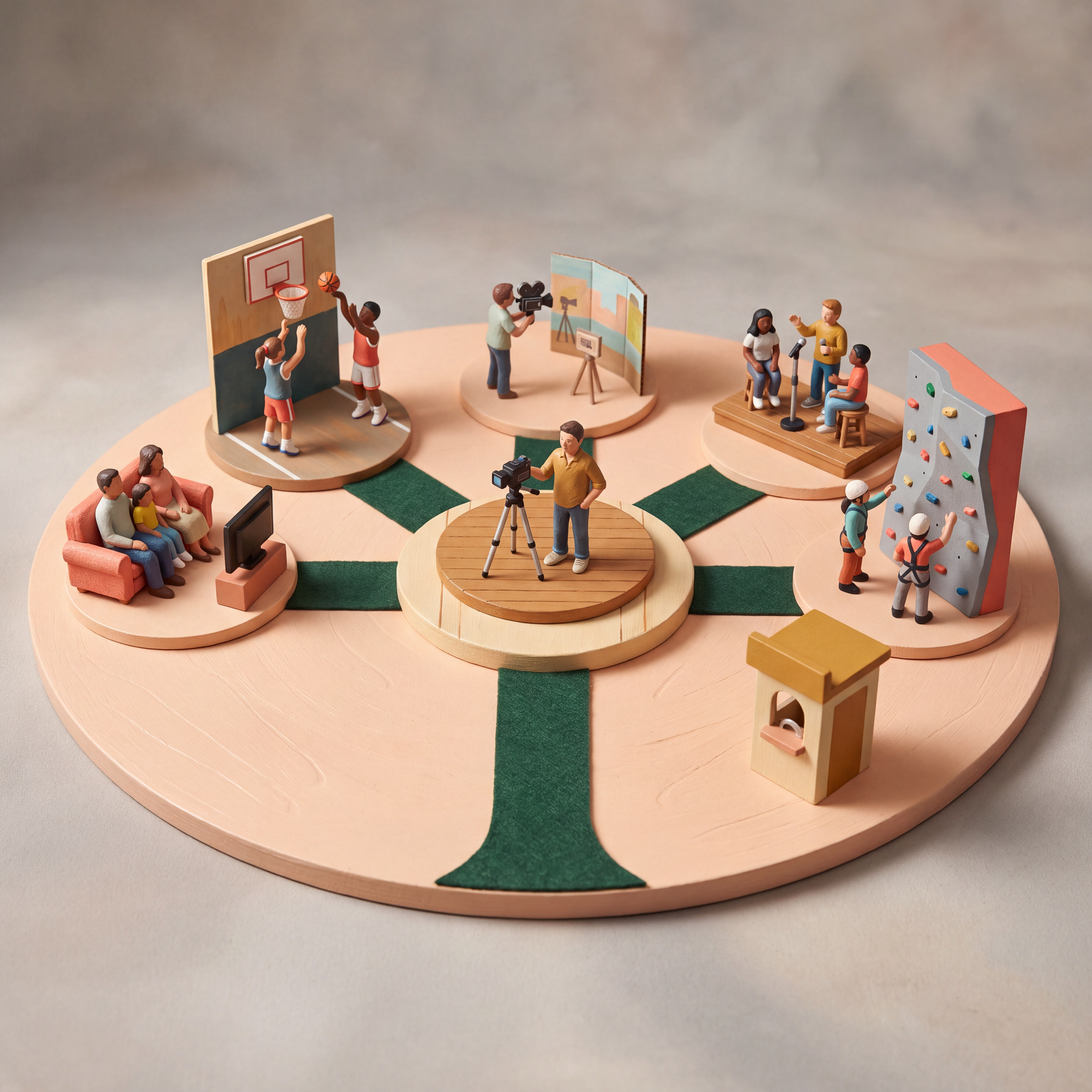
Their modeled behaviors revealed different interests. Most segments showed strong engagement with watching, sharing, and recreating content, while adventure-minded fans showed signals of interest in paid experiences, including adventure travel, theme parks, and action sports.
These are predictive signals, not verified purchases or evidence of demand for Dude Perfect products specifically. But they suggest opportunities for experiences and partnerships that extend beyond traditional merchandise.
For a creator-led business, those differences matter more than audience size. A follower count shows how many people are watching, not what different parts of that audience care about. Understanding those interests can help inform which products, experiences, and partnerships are worth testing.
What Creator-Led Brands Mean for Marketers
Creator-led companies are becoming competitors as well as partners to established brands. A creator who once promoted a product may now be developing one, backed by investors and distribution partners.
For marketers, that makes audience intelligence increasingly valuable. A large following can introduce a product to millions of people, but reach alone doesn't establish purchasing interest or long-term demand.
The same scrutiny investors apply to creator-led businesses should inform how brands approach creator selection. Brands need to understand who they're reaching, what those people are interested in buying, and whether those interests align with the product they're promoting.
As more capital flows into the creator economy, understanding which audiences are likely to become customers will be just as important as knowing how many people are watching.