
MTS, the livestream network backed by Andreessen Horowitz, marked six months on air in October. In September, a cofounder said it was on track for a $10 million annual revenue run rate. Its sponsorship packages start at $50,000 a month and include "presented by" billing in the show's title, plus a monthly interview segment with the sponsor.
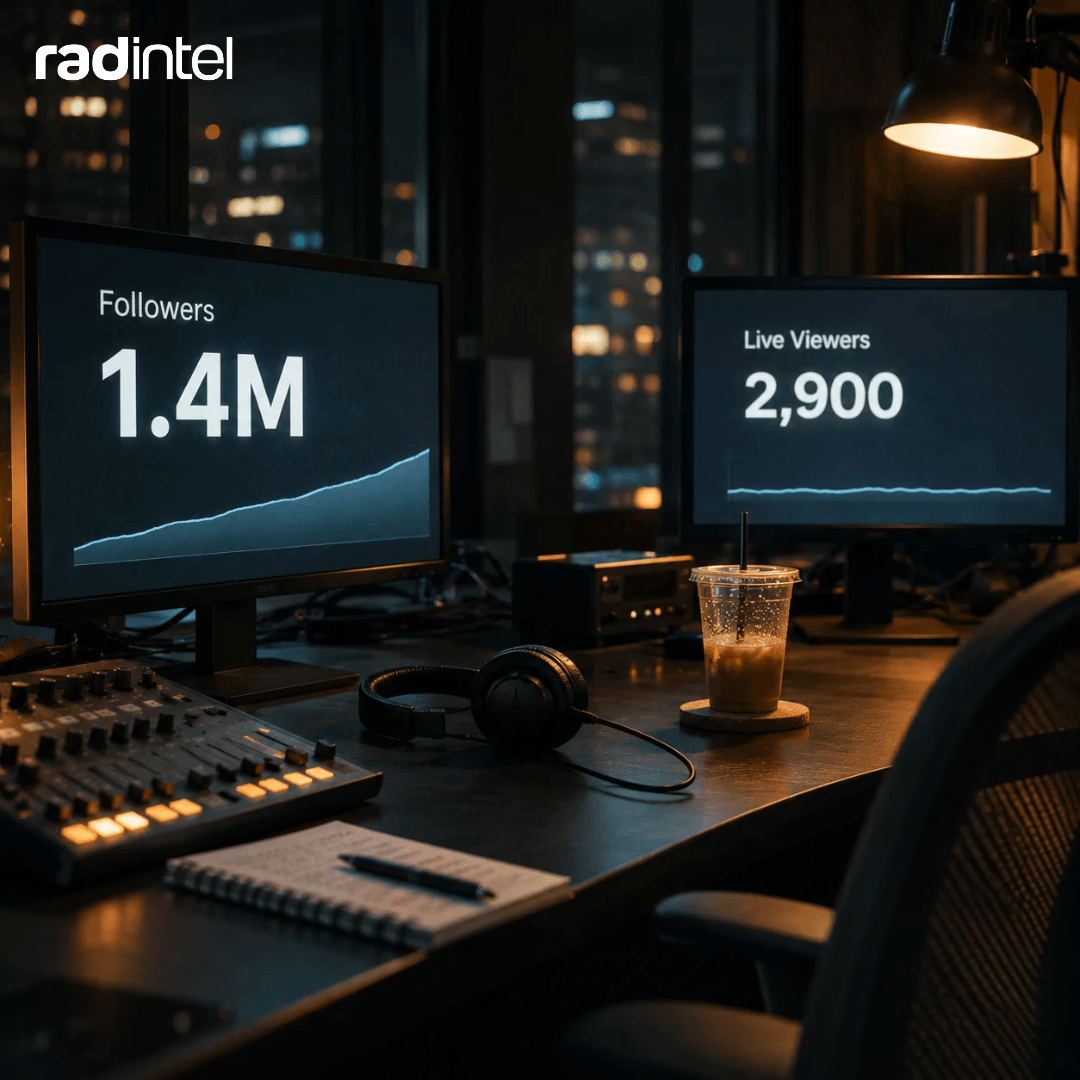
The audience behind those numbers is harder to pin down. According to the San Francisco Standard, MTS had built roughly 570,000 followers on X, but one October interview had drawn about 8,100 views across YouTube and X when the publication checked. A since-deleted advertising kit claimed 64% of its viewers work in technical AI roles and 31% at leading AI labs. Neither claim has been independently verified.
As live business shows spread, advertisers are being asked to pay premium prices for access to audiences they can't always verify.
Why Live Business Shows Are Taking Off
The format borrows what audiences have always liked about daily television. Hosts sit behind a desk. The screen fills with headlines, market data, and graphics. There are recurring segments, scheduled guests, and a set broadcast time.
The hosts are usually insiders who already speak their audience's language. Viewers can catch the show live on YouTube or X, listen later as a podcast, or discover it through a clip on LinkedIn or Instagram without changing their habits.

New shows are arriving quickly. MTS launched in April as an always-on network native to X and has since narrowed its focus to mostly AI and tech, often streaming for hours each day. Social Commerce Network (SCN) debuted on October 6 with a three-times-weekly show covering consumer brands, retail, beauty, and the creator economy. Breaking & Entering is applying the format to advertising and marketing.
The expansion is getting difficult to keep track of. In a November 6 edition of her On Background newsletter, media writer Emilie Gerber said she had 38 tabs open for new shows and newsletters launched in the previous month alone.
The similarities have already caused friction. Within days of SCN's launch, a designer who worked on Technology Business Programming Network (TBPN), the tech show that pioneered the format, called it a "shameless ripoff" and posted side-by-side comparisons of the two shows' visual identities.
Live broadcasts give hosts room to stumble, disagree, and change direction as news breaks, while viewers can weigh in as it happens. SCN founder Sammi Cohen has argued that as more communication becomes automated, audiences want a human touch. The strongest shows pair that spontaneity with the structure of a schedule, a set, and familiar hosts.
The Business Behind TBPN's Rise
Nearly every new entrant points back to TBPN. John Coogan and Jordi Hays launched it in October 2024 and went daily and live in March 2025, broadcasting three hours every weekday. It quickly drew guests like Sam Altman, Mark Zuckerberg, and Satya Nadella.
The business followed. TBPN brought in roughly $5 million in advertising revenue in 2025 and was reportedly on track for more than $30 million in 2026, according to figures cited by SiliconANGLE.
Then, in April, OpenAI acquired TBPN for an undisclosed amount, reportedly in the low hundreds of millions of dollars. TBPN wound down most of the sponsorships behind that $30 million projection, though some sponsors have since returned. The audience relationships and industry access TBPN had built were valuable enough to attract a buyer without the advertising model. OpenAI also saw value in the team's marketing and communications expertise.
According to Net Influencer, several of TBPN's roughly 30 sponsorship deals bundled marketing and communications advice from the hosts. Brands were paying for proximity and counsel alongside airtime.
How Livestream Sponsorships Work
For brands, sponsoring one of these shows looks quite different from buying a traditional television ad. At TBPN, brand marks ran across the set, the graphics, and the hosts' clothing. Deals were yearlong and category-exclusive, giving sponsors a recurring presence in the show and its clips.
The newer shows have adopted the model. On MTS, sponsor names scroll across the ticker where stock prices would usually run, and packages bundle title billing with an interview segment. SCN also launched with sponsors, positioning them as partners in building the show.
For advertisers, the pitch is a continuing presence inside an industry's daily conversation instead of a single spot. But the line between coverage and commerce can be thin. Some packages include interviews with paying brands, and the San Francisco Standard reported that it couldn't find a public MTS editorial policy explaining how the two are kept apart.
In a format whose appeal depends heavily on the credibility of its hosts, advertisers have reason to pay attention to those arrangements.
The Audience Measurement Problem
Television has long relied on established audience measurement systems that give advertisers a way to evaluate what they're buying. Live business shows have no comparable standard for measuring viewership and audience demographics across platforms like YouTube and X.
Instead, brands are pricing deals using numbers that don't always line up. Platforms count views differently. Follower counts can sit far above live viewership. Clips can travel well beyond the audience that watched the original broadcast. And claims about who's watching, including job titles, seniority, and employers, often come directly from the seller.
At RAD Intel, we believe understanding who makes up an audience, how they behave, and what influences them gives brands a stronger basis for deciding where to invest.
Consider a brand paying $50,000 a month to reach AI professionals. A large follower count gives advertisers little indication of how many relevant decision-makers regularly watch the show. Even strong engagement numbers offer limited insight if the advertiser can't determine who's generating them.
Before signing a yearlong, category-exclusive deal, brands should know who's actually watching, how much of the audience comes from live broadcasts versus clips, and whether the seller's audience claims can be independently verified.
Live business shows have demonstrated an appetite for industry-specific programming with recognizable personalities and direct audience participation. TBPN's growth and acquisition have given other networks a compelling model to follow.
But as sponsorship dollars move into these shows, advertisers need a clearer picture of the people they're paying to reach. The shows have figured out how to attract sponsors. Now they need to give advertisers the evidence to justify staying.