
Diwali has just come and gone, and as we've been reviewing this year's festive advertising at AVC, something has stood out to me: where are the North American brands?
India has delivered another season of inventive Diwali campaigns, with brands finding fresh ways to explore family relationships, neighbourhood dynamics, and familiar traditions. But across Canada and the United States, comparable work from major brands has been much harder to find.
It's a curious absence during one of the most significant cultural and commercial occasions of the autumn season for millions of South Asian consumers. While North American brands spend months preparing for Halloween, Black Friday, and Christmas, Diwali marketing still seems to receive far less attention. Some of this year's strongest campaigns show just how much creative territory there is to explore.
What the Best Diwali Campaigns Understand
Parking disputes, noisy neighbours, and cricket balls landing in the wrong yard aren't the usual ingredients for a Diwali campaign. But Cadbury Celebrations found a way to turn those everyday frustrations into a story about reconciliation. In its #ThisNokJhokIsSweet campaign, a box of chocolates becomes the peace offering that helps neighbours put their disagreements aside.
Cadbury understands that the relationships surrounding Diwali aren't always picture-perfect. Sometimes the celebration is an opportunity to repair the small disagreements that come with living alongside one another.
Pet care brand Supertails finds another unexpected angle in No Bang Diwali. Its campaign shows a family celebrating beneath the dining table, surrounded by festive food and decorations. They're squeezed into the same uncomfortable hiding place where frightened pets often retreat when fireworks begin. There's something charming about the scene, and it makes you think about the animals who spend the evening hiding there.
Global players also understand the power of leaning into cultural craft. In its recent "Shot on iPhone" Diwali campaign, "Step Into the Light," Apple partnered with Indian luxury fashion label Raw Mango and filmmaker Sanjay Garg. Rather than using the festival as a superficial promotional backdrop, Apple set dynamic folk choreography and period music against Rajasthan's historic Tijara Fort: using the natural low-light demands of the festival of lights to showcase its camera technology while honouring traditional artisanship.
These campaigns find something specific and recognizable within the celebration, then build their creative around it. They show how effective Diwali advertising can draw on everyday relationships, cultural traditions, and shared experiences without relying on familiar festive imagery. Publications such as Mad Over Marketing have been a great resource for discovering this work and seeing the range of ideas Indian brands are bringing to Diwali advertising.
There's also a familiar approach to festive advertising that leaves much less room for creativity. An existing product ad gets a diya in the corner, a gold border, and a "Happy Diwali" greeting. Add a 15% discount, and the brand considers its Diwali marketing complete.
These familiar symbols make the occasion recognizable, but they could appear in a campaign for almost any brand. There's little consideration for how people actually celebrate, what they're shopping for, or the traditions that influence their decisions. The discount might generate a sale, but it doesn't give consumers much reason to remember who offered it.
Diwali Marketing in North America Has Its Own Stories
Of course, the Diwali celebrated in Toronto or San Francisco doesn't always look like the Diwali celebrated in Mumbai or Delhi.
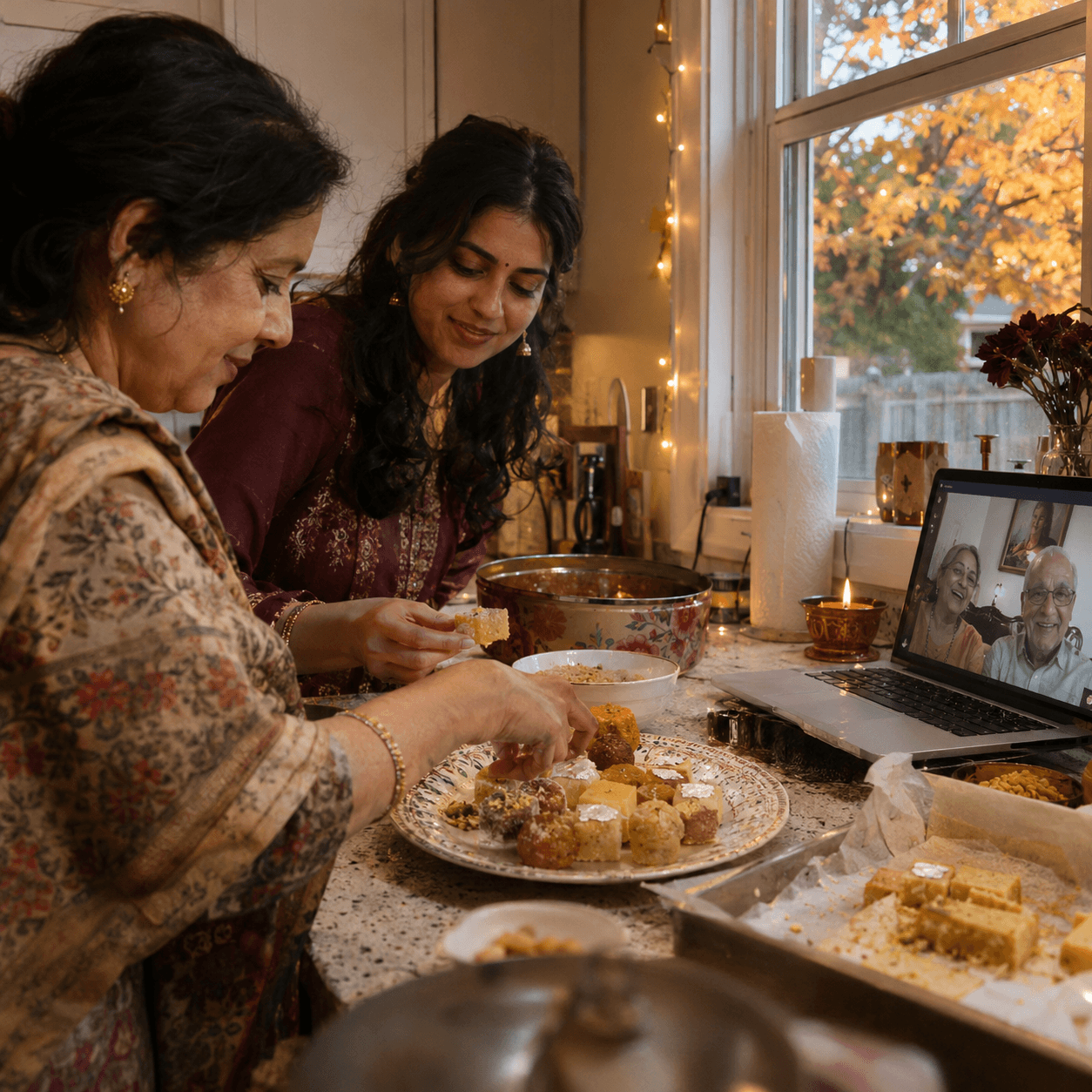
For a family in North America, Diwali might mean preparing traditional sweets while finding a time to video call grandparents back home. Elsewhere, a young couple is hosting their first Diwali dinner together, combining traditions from two different family backgrounds. Around another table, friends who grew up celebrating different holidays are sharing in the festivities.
These are the kinds of experiences North American brands could explore, but they require understanding how culture evolves across generations and households.
MAC Cosmetics 2026 creator campaign offers one encouraging example. Featuring South Asian creators, the campaign draws on personal memories and familiar festive traditions, from jasmine and bangles to the beauty rituals passed down through generations.
I appreciate how the campaign makes room for individual cultural expression and connects beauty to the diverse experiences of South Asian communities. It offers a perspective rooted in the lives of consumers here rather than importing a single interpretation of Diwali from another market.
The Commercial Calendar Hasn't Caught Up
MAC shows what's possible when a brand puts thought into reaching South Asian consumers during Diwali. Yet examples like this remain relatively uncommon in the North American campaigns we've reviewed, raising questions about where Diwali falls in brands' annual marketing priorities.
Halloween, Black Friday, and Christmas have established places in North American marketing plans, with months of preparation, coordinated retail activity, and significant media support.
I suspect many organizations still treat multicultural occasions as additions to the marketing calendar rather than opportunities that deserve their own planning.
A campaign assembled shortly before Diwali, supported by a modest digital budget and a generic discount, is unlikely to achieve the same reach or impact as a seasonal program developed months in advance.
Limited investment can also reinforce itself. When a campaign receives little media support, its performance may appear underwhelming, making it harder to secure a larger commitment the following year.
Brands shouldn't allocate identical budgets to every cultural occasion. Investment should reflect their audiences and commercial opportunities. But those decisions need to be informed by how consumers actually celebrate and spend, rather than assumptions about which holidays belong in the mainstream.
The Opportunity Is Already Here
For brands with substantial South Asian audiences, there's a meaningful opportunity being overlooked. The campaigns we've seen from India offer plenty of inspiration, but North American brands also have their own cultural experiences and stories to explore.
There's no shortage of stories to tell. I hope by this time next year, more North American brands make the effort to tell them with the intention, insight and creative ambition this community deserves.