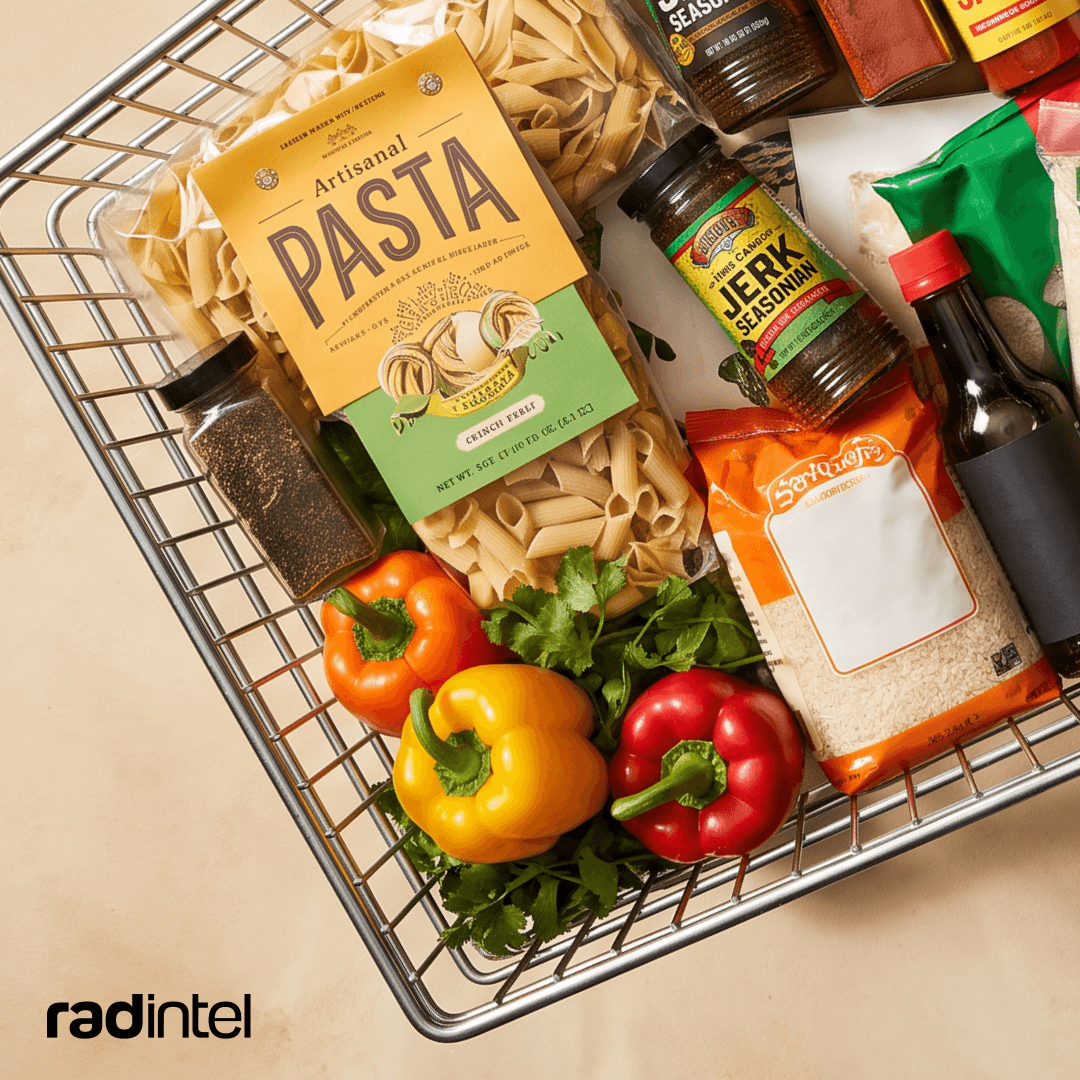

For decades, the "international food" aisle was a single, crowded row tucked near the back of the grocery store, treating everyday global flavours like an exotic novelty. Today, that single aisle has expanded into massive, fully fledged supermarket empires.
Look at the grocery footprint. T&T Supermarket dominates Asian food retail. Seafood City anchors Filipino communities. Chalo! FreshCo tailors its aisles to South Asian shoppers, while Adonis and Longo's drive steady volume through Mediterranean and Middle Eastern culinary staples. These are far more than niche specialty storefronts. They are multimillion-dollar commercial anchors.
These grocers reflect what consumer research has confirmed on the ground. Proprietary research from AVC examines the shopping and media habits of cultural segments across North America. The findings show that nearly half of second-generation consumers live in cross-cultural households, where different culinary traditions shape shopping habits in ways traditional retail categories often overlook.
Multicultural consumers have moved beyond the margins of marketing to become a central force in the consumer mainstream. To win their loyalty, brands must adapt directly to this dynamic commercial reality. Yet too many consumer packaged goods (CPG) leaders still treat cultural outreach as an isolated translation project rather than a core commercial strategy.
For CPG brands, an effective multicultural marketing strategy means understanding how culture and household habits shape purchasing decisions. Those insights inform product assortment, shelf placement, creative strategy, and media investment.
The brands poised to thrive over the next decade are fundamentally restructuring their commercial operations around this demographic reality. During a recent Digital Day Camp session exploring our research findings, I joined leaders from Grace Foods and Reckitt Benckiser Canada to discuss practical blueprints for modern brand growth.
As I shared on stage, with more cross-cultural households, consumers no longer shop within just one cultural category. They are bringing different flavours, ingredients, and brands into their everyday shopping baskets.
For CPG brands, this creates an urgent opportunity to rethink product assortment and shelf placement, while reaching consumers beyond their traditional ethnic target audiences.
The real-world results shared by both organizations prove that whether guiding a heritage brand or a global conglomerate, cultural intelligence represents a measurable commercial imperative.
Grace Foods and the Business of Going Mainstream
Grace Foods commands massive brand equity. Long established in diaspora kitchens for pantry staples like jerk marinades, hot pepper sauces, coconut water, and canned ackee, the company has been a staple in Caribbean and heritage households for decades. But the challenge for a heritage brand is scaling into conventional grocery banners without alienating the foundational consumer base that built the company.
For Grace Foods Canada Inc., and Gareth Geddes, head of marketing, heritage lines can’t stay confined to specialty aisles.
"For us in retail, the aisle in Canada is international and multicultural," says Geddes. "Grace began in Ontario to serve the Caribbean community; Canada is now our whole market." That mainstream push delivers tangible results, securing Grace Foods as the No. 1 coconut water brand in Canada.
Securing centre-store placement means pushing back against retail category managers who still isolate diverse brands in back-corner corridors. By refining packaging cues and redirecting trade spend toward high-traffic aisles, the brand expands its reach without diluting its core culinary identity.
Grace Foods understands that today's shopper easily tosses jerk seasoning into the same basket as dried pasta. By aligning shelf placement with how diverse households actually cook, the company proves authentic culinary roots and mass-market scale can thrive together.
When Global Marketing Meets Local Culture
At the other end of the scale stands Reckitt Benckiser, the multinational behind household essentials such as Lysol, Finish, Enfamil, and Mucinex. For global consumer packaged goods giants, handing down standardized playbooks from central headquarters protects operating margins and maintains brand consistency.
Yet standard global creative assets rarely connect with the multilayered North American market. As Urva Muhammad, director of media and e-commerce at Reckitt Benckiser (Canada) Inc., pointed out on stage, "If you want to grow with Canada, you have to go where the growth is, and that is all through new immigration and multicultural markets."
Muhammad demonstrates to global leadership that winning local market share requires bespoke creative and culturally attuned media investments rather than generic global rollouts.
Modernizing the Commercial Core
Our Digital Day Camp discussion highlighted how some brands recognize the growth opportunities in multicultural markets, while others continue to overlook them.
Our latest AVC research reinforces the importance of cultural intelligence in building meaningful connections with consumers beyond language alone. Navigating diverse markets isn’t an operational friction point to outsource or automate away. Understanding the specific media consumption and basket-building habits of these segments has become an executive team's sharpest commercial asset.
Because the hyper-diverse North American market serves as a proving ground for global commerce, cultural consumption is evolving faster than legacy models can track.
If your brand is still debating whether multicultural marketing deserves its own budget, you are already falling behind.
The consumer mainstream has already shifted, and brands that fail to align their shelf placement, media budgets, and product lines will watch their market share slip quietly out of the shopping cart.
To access our full research on the shopping and media habits of cultural segments or to build a culturally fluent strategy for your brand, connect with the AVC team and me at hello@avcomm.ca.