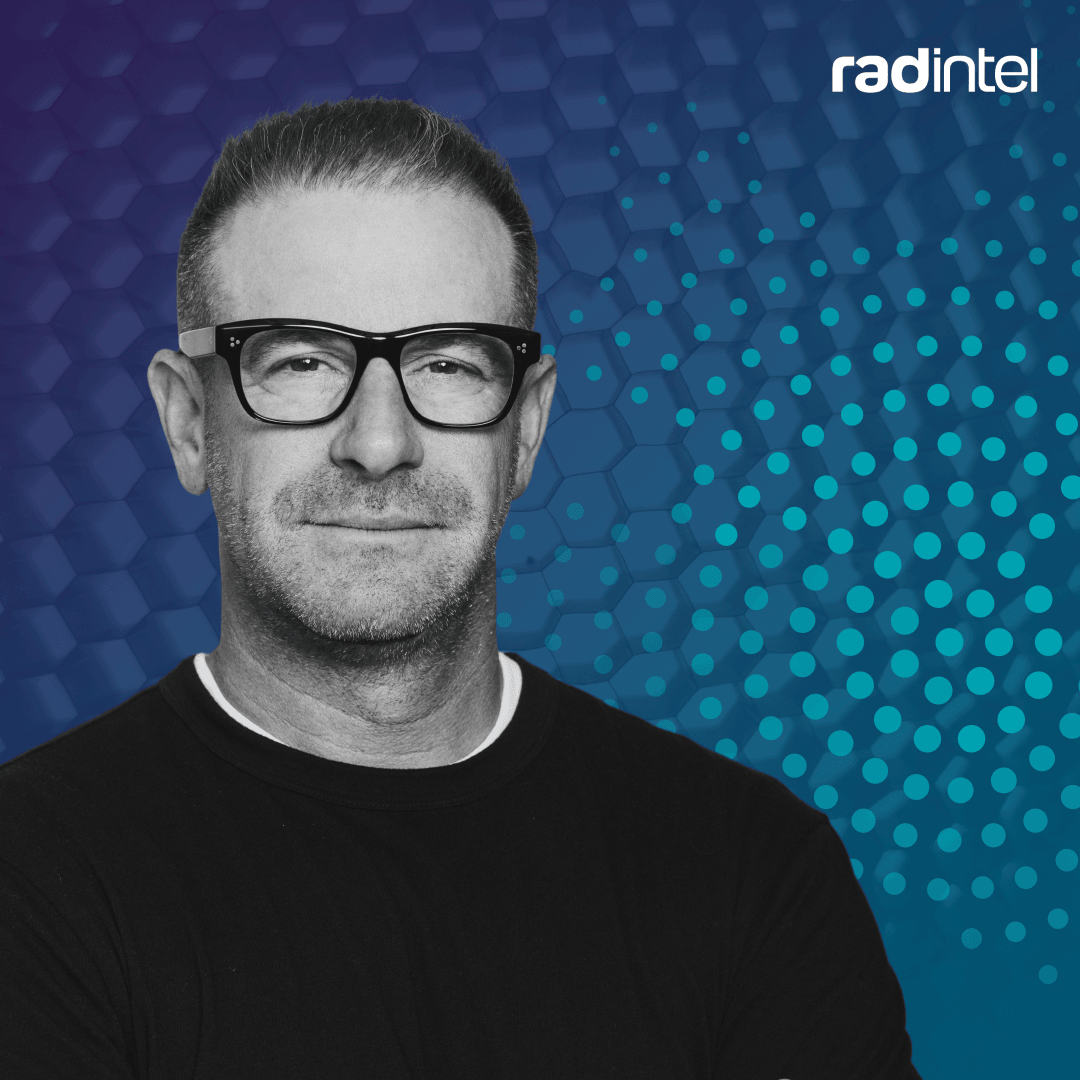

Our CEO, Jeremy Barnett, joined Buy Hold Sell, a CrossCheck Media podcast hosted by Todd M. Schoenberger, CEO of CrossCheck Media. Schoenberger leads across both media and capital allocation, making this conversation especially relevant as AI starts to influence how investment decisions get made.
This comes at a moment when AI is moving beyond tools and into systems that shape how businesses operate and how capital gets deployed. Conversations around capital allocation and operating models are starting to change, and this audience is directly involved in those decisions.
The episode covered RAD Intel’s growth, the shift toward multi-business platforms, and AI-driven M&A.
"We think about it as moving from an AI tool that’s used on a campaign-by-campaign basis to being in the decision layer across multiple businesses that acts as the thing you look at before dollars are spent." - Jeremy Barnett
The Model Is Changing Faster Than Most Companies Are Built For
In 2025, RAD Intel formalized several agency partnerships, including Omnicom, extending its intelligence layer across more enterprise environments and use cases.
The move to a holding company and a multi-business AI platform defines how the business grows. Instead of building a single product, the focus is an intelligence layer that operates across businesses, improves decisions in each, and compounds learning over time.
AI Is Starting to Influence What Gets Built and Bought
One of the more important parts of the conversation is our AIBO — Artificial Intelligence Buyout Strategy. The idea is simple. AI can identify which companies, markets, and strategies are most likely to produce returns before capital is committed.
Capital allocation has traditionally relied on a mix of historical data, operator experience, and pattern recognition built over time. That still matters, but it’s no longer the only input. Predictive intelligence adds a forward-looking layer that helps identify opportunities earlier and with more structure.
Decisions can be informed by predictive intelligence. That creates a more structured approach to identifying opportunities, evaluating risk, and allocating capital with greater confidence.
Where This Is Going
The bigger takeaway is how AI is starting to sit upstream of execution across the board. That shift is already reshaping how decisions get made, long before anything goes live.
The companies that adapt will use AI to shape decisions before action is taken. They’ll move earlier, with more clarity, and with fewer unknowns. Others will keep trying to optimize after the fact, reacting to outcomes instead of shaping them.
As AI moves upstream, results start to depend on the decisions feeding the system. Better inputs give it direction, and performance improves from there.
Jeremy’s perspective throughout the conversation reflects that shift. AI is changing how decisions get made, which changes outcomes before they’re visible. That’s where the leverage is moving.
Watch the full Buy Hold Sell conversation here.