
Human judgment is having a bit of a moment right now. Which is funny, considering we've had it this whole time.
But the better AI gets at predicting, recommending, analyzing, and generally doing things we used to rely on people to do, the more attention seems to be shifting toward the part that still belongs to us. You can give someone better information. You can give them more of it, faster. Eventually, though, someone has to decide what to do next.
That idea has been coming up more and more in the conversations I have about AI and marketing. It’s also pretty central to what we’re building at RAD. However good the intelligence gets, there’s still a person on the other side of it deciding what they believe, what matters, and what they’re willing to act on.
Think Again, our October issue of RADAR, is about human judgment. Where it makes us better at our jobs, where it gets in our way, and what happens when AI gives us information that challenges what we thought we knew.
Human judgment is an incredibly valuable resource. We have context. Taste. Experience. We understand things that don't always fit neatly into a dataset. A marketer who has spent years working with a brand knows things about that brand that a model doesn't.
We also have egos.
And biases. And office politics. And favorite ideas. We don't particularly enjoy being wrong, and we're pretty good at finding reasons to stick with what we already believe. Experience can teach us a lot, but it can also make us a little too confident in our own opinions. Especially once we’ve been doing this a while.
For our cover story, “What Does It Take to Change a Marketer's Mind?”, I decided to put some of this to the test. We used our AI-driven platform to give three senior marketers the same audience intelligence and asked them to make a recommendation. Same information, three different people, and plenty of room for their own experience and instincts to enter the picture.
I was curious about what they'd notice, what they'd prioritize, and, perhaps most interestingly, what might convince them to change their minds.
Now, three marketers and one experiment hardly constitute a scientific study. But it gave us an interesting window into how people interpret intelligence and make decisions. And I got to ask marketers to explain their thinking, which, as an editor, is a lovely position to be in.
We also spent some time on a particularly uncomfortable marketing scenario — what happens when the creative you love isn't the creative your audience prefers? Our secondary story explores the tension between taste and performance, including what happens when a campaign you've poured your heart into gets a less-than-enthusiastic response from the data. A little humbling, perhaps. But that's kind of the point.
Throughout October, we'll be exploring other places where experience, instinct, and AI collide. The decisions we defend, the assumptions we carry, and what it takes to admit we might need to reconsider.
I didn't put this issue together to argue that humans are better than AI, or that AI should be making all our decisions. That would be boring and frankly untrue. I wanted to get into the part where both have something useful to contribute and plenty of ways to get things wrong.
And if you finish this issue questioning an opinion you were pretty confident about before, well, I think we've done our job.
Okay, go read,
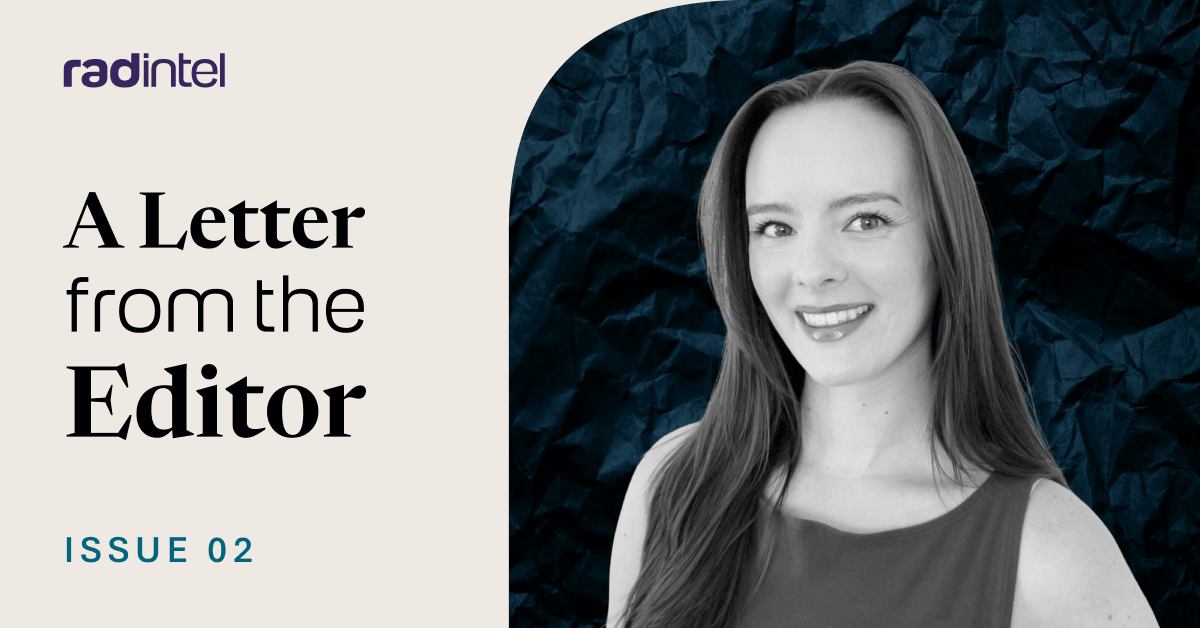
Carly Cowie
Editor-in-Chief, RADAR