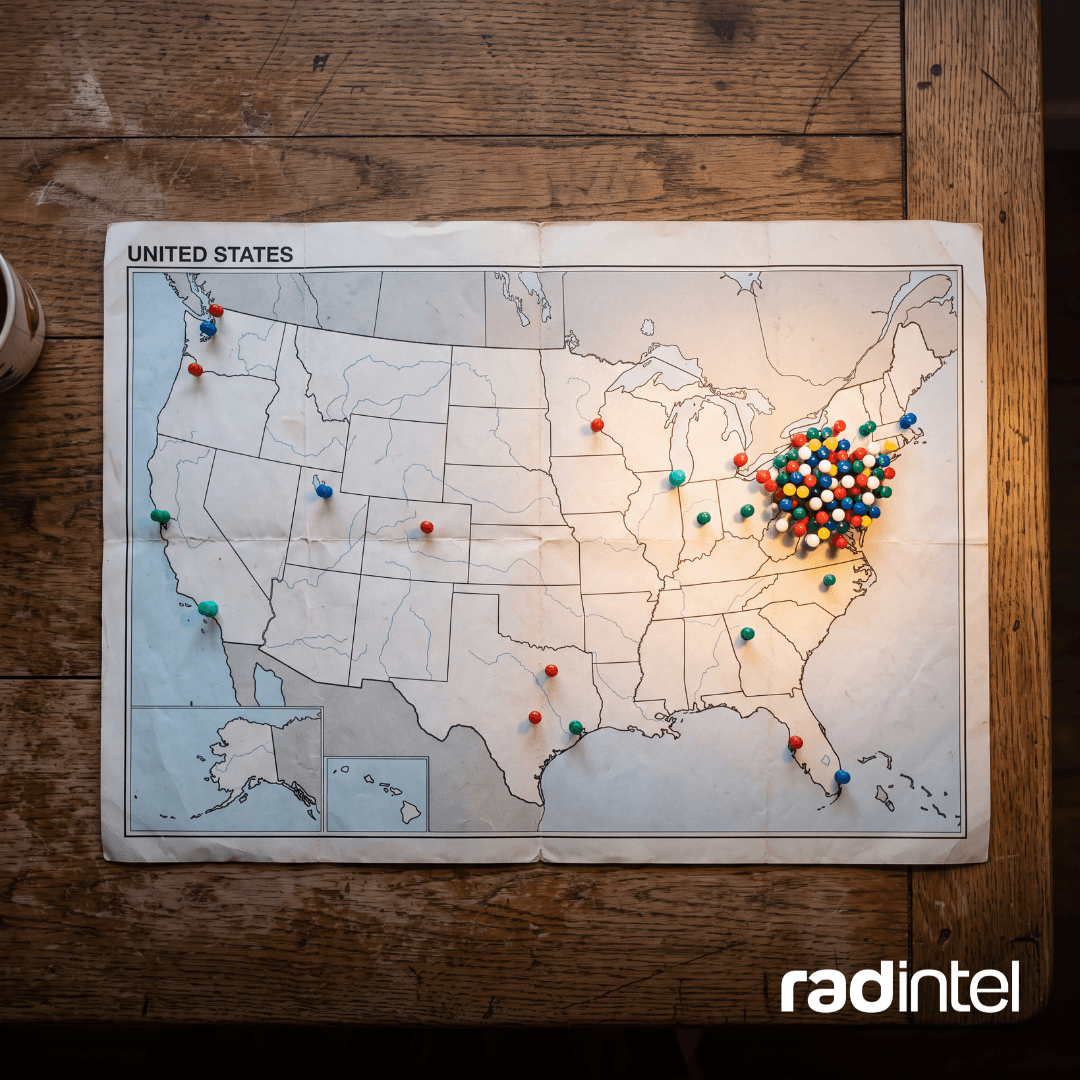

Search used to give brands time to make their case.
A buyer asked a question. Google listed the options. Brands competed for the click. The website visit started the sales path, and the strongest teams used that moment to explain who they were, what they solved, and why they deserved consideration.

That path is much, much shorter today — and every day it’s getting shorter.
Google can answer the question before anyone reaches the website. A buyer can ask for the best platform, agency, tool, or service and get a short list right there.
This changes the pressure on every brand.
The first impression may happen before a site visit, before a demo, before a sales call, and before the brand has any control over the conversation.
By the time someone scrolls to the results, the category may already feel narrowed. Most teams are treating this like a traffic issue. The bigger issue is whether the brand made it into the buyer’s mind at all.
The Category is Shrinking Earlier
Ask Google for the best CRM for a mid-sized team and the answer may explain the category, name a few options, and frame the choice in 1 response.
What used to take 10 tabs can now happen in 1 interaction. That matters because a brand that doesn’t appear in that answer may never get considered.
Fewer clicks are the symptom. The harder problem is that buyers are seeing a smaller set of names much earlier.
More content won’t fix that on its own. More spend won’t either.
The brand has to be clear enough to be placed correctly when the answer is built.

That sounds obvious, but it’s where a lot of companies lose ground. Their homepage says 1 thing. Their ads say another. Their sales deck stretches into a different category. Their press reads like it was written for the company instead of the market.
Confusion is expensive now.
Paid Media is Moving the Same Way
Paid media is starting to follow the same pattern.
Ads are no longer only sitting beside the answer. In some AI search experiences, they are beginning to show up inside the response itself.
The role of the ad changes.
On a traditional search page, an ad could win attention with a sharp headline and the right bid. Inside an answer, the brand has to make sense in context. The message has to fit the question being asked.
Generic positioning struggles here.
“AI-powered,” “data-driven,” “full-funnel,” “next-generation,” and every other phrase that sounds impressive becomes weak because it doesn’t tell the buyer enough. Clear beats clever here.
A company needs to be able to say what it does, who it helps, why it belongs in the category, and what proof backs it up.
If that story changes from channel to channel, the brand becomes easier to skip.
SEO and Paid are Closer Than Teams Think
SEO and paid used to solve different problems. One helped you show up. One helped you convert.
The separation is fading. Both now depend on the same thing. Can the brand be understood quickly?
Ranking still matters. Paid visibility still matters. But neither has the same value if the buyer’s first impression is already being formed before the click.
A brand can rank. A brand can spend. A brand can still miss the moment where the decision starts. Search tactics don’t fix that.
It changes how brands need to describe themselves across every public surface. Website. Ads. Social. Sales materials. Press. Executive content. Investor copy.
This is where comms teams should be louder in the room. Search visibility now comes down to how clearly you’re positioned. If the market cannot repeat what you do in plain English, Google probably won’t do you the favor of cleaning it up.
Clarity is Now a Growth Requirement
Traditional search rewarded relevance and authority. AI search adds a more basic test.
Can the brand be understood?
That means the company’s category, audience, use case, proof, and point of view need to hold together. Mixed messaging slows that down.
A homepage says the company is an AI marketing platform. The sales deck calls it a revenue engine. The press release calls it a holding company. The ad calls it an investment opportunity. The social content chases whatever trend is moving that week.
Internally, that may all make sense. Externally, it creates work for the buyer. And buyers do not reward brands for making them work harder.
The companies that hold up in this environment are the clearest. They know who they serve, what problem they solve, and what proof supports the claim.
That is Where RAD Intel Fits
RAD Intel focuses on the work that happens before the click, before the campaign, and before the market decides where a brand belongs.
It starts with the audience.
Who is the brand actually trying to reach? What do those people care about? What language already moves them? What proof do they trust? What would make them stop, pay attention, and act?

From there, the work moves into content, creative, demand generation, and conversion. The point is not to create more marketing activity. Most teams already have plenty of that.
The point is to make the brand easier to understand, easier to place, and easier to act on across the full buyer path.
Search is giving brands less time to explain themselves, and marketers have to pay attention.
Today there’s less room for vague positioning. Less patience for broad claims. Less margin for messages that do not connect.
RAD Intel helps brands tighten the story before the market writes it for them.
We Have Seen This Kind of Shift Before
Facebook is the cleanest example.
For years, brands treated followers like a direct line to the market. Then the feed changed. Facebook didn’t disappear. Brand pages didn’t disappear. But the open window where a company could post and reliably reach its own audience got smaller.
The brands that adapted understood the new terms. Stronger content. Smarter distribution. More direct paths to the audience.
What Changes From Here
Search isn’t going away. But the open window where brands could wait for the click and then make their case is shrinking. In some categories, it may disappear almost entirely.
That creates a new standard for modern marketing.
Brands need to be discoverable. They also need to be understandable.
They need pages that explain the category clearly. Proof that matches buyer intent. Content that helps the market place them correctly. Messaging that holds up across search, paid, social, sales, and press.
Presence used to be earned in the results. Now it may be decided before the results ever appear.