
The trouble with measuring how much time AI saves is that we tend to ask the person using it.
Someone who finishes a report in ten minutes instead of two hours has every reason to call that a productivity win. But the report still has to be reviewed. Someone has to check the numbers, correct the mistakes, and decide whether the information is useful in the first place.
Research suggests AI's productivity gains depend heavily on where you sit in the workflow. One employee might save hours while the next inherits more work. And most companies are still measuring the hours saved, without accounting for what happens afterward.
Where AI Saves the Most Time at Work
AI can save time on tasks employees can complete independently, particularly email. In a six-month randomized experiment, Microsoft researchers gave about half of 7,137 knowledge workers across 66 firms an AI assistant built into their email, documents, and meetings software.
Users spent about two fewer hours a week on email, a 17 percent drop. Time in meetings and on documents barely changed. The reason is that email is solitary, so each person could change their own habits. Meetings and shared documents required colleagues to change together, and they didn’t.
In a September 2026 study from Google, Google DeepMind, and MIT FutureTech, just under three quarters of 637 surveyed scientists said AI saved them time, averaging 6.9 hours a week. About 18 percent used it to work fewer hours.
But getting time back doesn't necessarily mean there's less work to do.
Why AI Can Create More Work
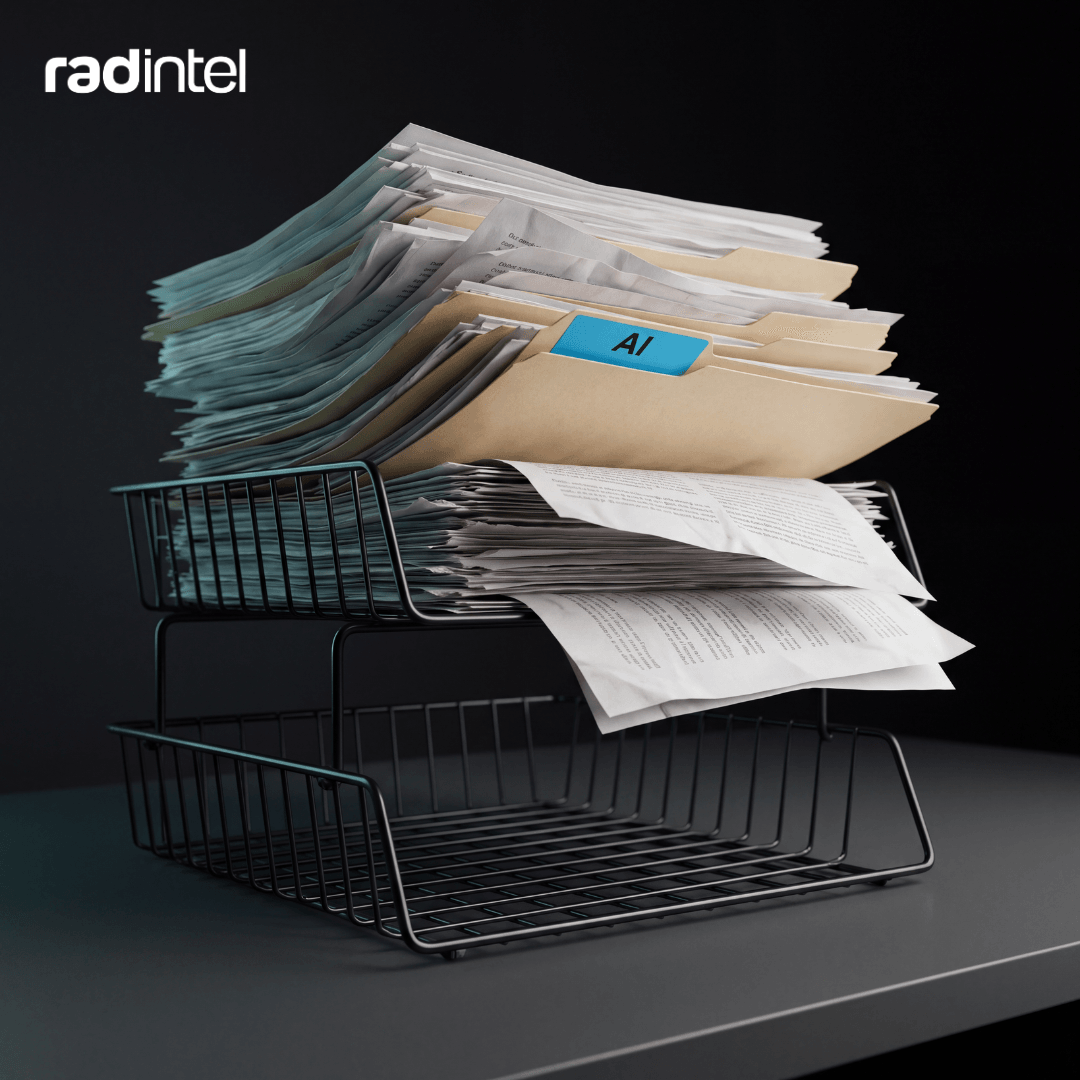
AI can create additional work when employees have to verify its output, correct mistakes, or manage a growing backlog of tasks. The Google study found that 41 percent of scientists reported a growing backlog of untested hypotheses. Among those who saved time, 46 percent spent more than a quarter of it checking or fixing AI output.
Office work has its own version of this. Glean's Work AI Index 2026 found that workers say AI saves them 11 hours a week. They also spend 6.4 hours a week on what Glean calls "botsitting": feeding the tool missing context, checking its answers, and fixing its mistakes. Only 13 percent said their organization was performing significantly better because of AI. Glean sells AI software, so its findings deserve some caution, but the gap between personal time saved and company results is hard to ignore.
In a 2026 survey commissioned by Optimizely and conducted by Savanta, only 4 percent of 2,003 marketing leaders said AI saved them time at every stage of their process. The rest reported spending time editing and correcting AI output, along with additional hours moving information between systems that don't talk to each other.
Sometimes the extra work lands on someone else. In 2025, researchers at BetterUp Labs and the Stanford Social Media Lab coined the term “workslop” for AI-generated work that looks finished but doesn’t move a task forward. About 40 percent of the 1,150 U.S. desk workers they surveyed said they had received it from colleagues.
The Gap Between Perceived and Actual AI Productivity
In a 2025 randomized trial by the research group METR, 16 experienced open-source developers took 19 percent longer on real tasks when using early-2025 AI tools. Afterward, they estimated AI had made them about 20 percent faster.
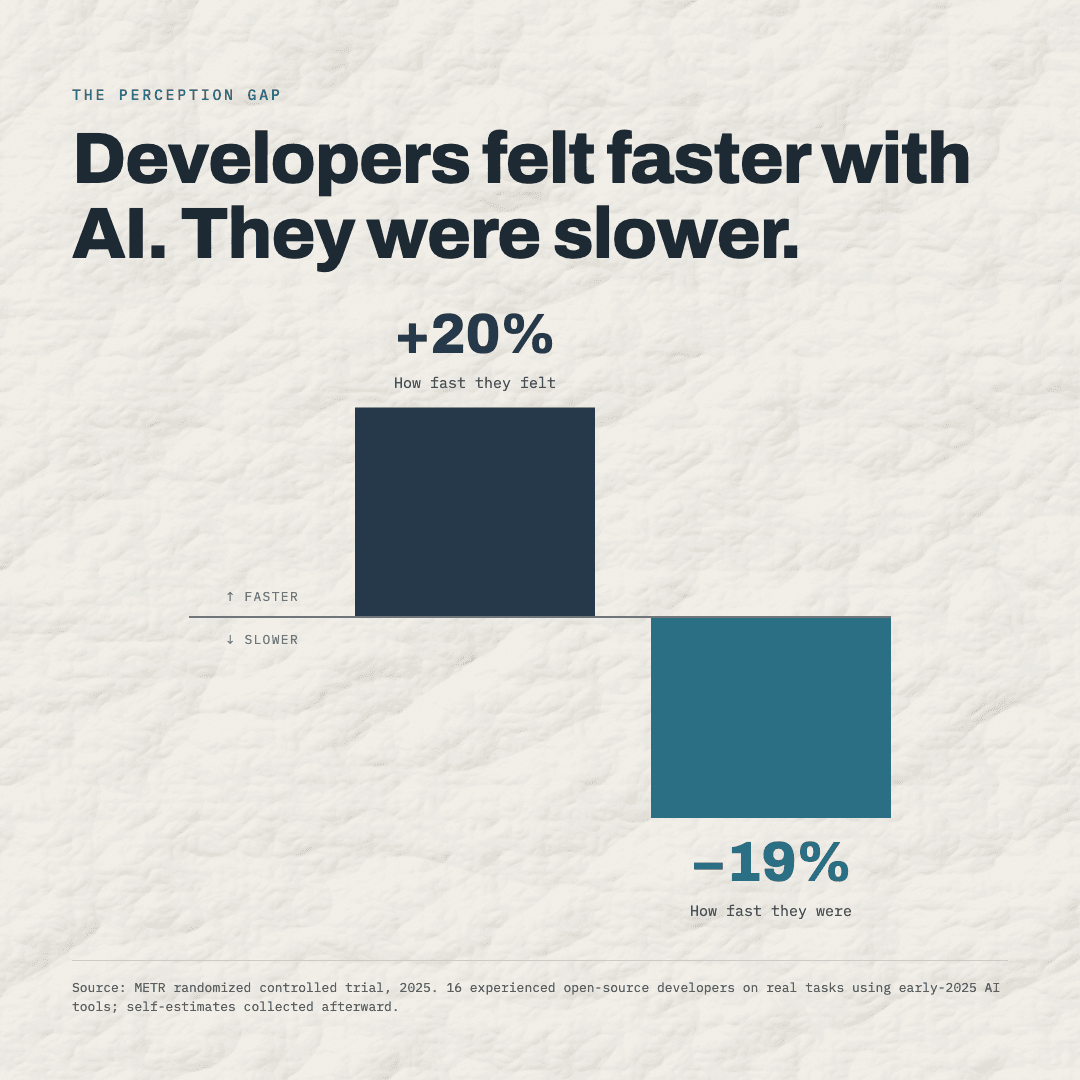
The study was small, and the tools have improved since then. Still, it shows why self-reported time savings are difficult to trust. The work feels faster when a tool produces something immediately. The checking, correcting, and waiting that follow are easier to overlook.
What Makes AI Time Savings Possible
Whether AI saves time depends on how much coordination a task requires, how easily its output can be verified, and who is responsible for reviewing the finished work. The evidence points to three questions.
First, can one person finish the task? Drafting an email or cleaning up your own writing produces real savings. Work that depends on approvals or shared decisions may see smaller gains.
Second, is the output easy to check? AI saves time when mistakes are obvious. It creates work when every number, citation, or line of code needs verifying.
Third, are you creating the output or receiving it? The person who generates a report in five minutes may save an hour. The person who reviews it may lose one.
The same tool can save one person hours while adding hours for the next person in line. Creator marketing shows this clearly. A strategist can generate dozens of creator briefs in an afternoon, only to send them into an approval process that takes weeks. And the question that matters most, which of these creators actually reaches the right audience, doesn't get answered by producing more briefs.
How Companies Should Measure AI Productivity
Companies can get a more accurate picture of AI productivity by measuring entire workflows, from the initial request to the final decision. That includes time spent reviewing output, correcting mistakes, waiting for approvals, and discarding work that never gets used.
That exercise will show where AI-assisted work piles up, whether it’s a slow legal review, an unclear approval owner, or a manual handoff. Fixing that constraint often matters more than generating more material.
Marketing teams face the same problem when AI makes it easier to generate campaign concepts, creator shortlists, and creative variations. More options still have to be evaluated, and someone has to decide which are worth the investment.
At RAD Intel, audience intelligence helps inform those decisions earlier. Understanding who a campaign needs to reach, what resonates with that audience and which creative approaches are likely to perform gives teams a stronger basis for deciding which ideas deserve more time, budget and attention.
A company can have employees saving hours every week and still struggle to get work out the door. Until leaders measure what happens across the entire process, they'll have a hard time knowing whether AI is making their teams more productive.
A saved hour only counts when the work reaches a decision sooner, or when someone actually gets that hour back.