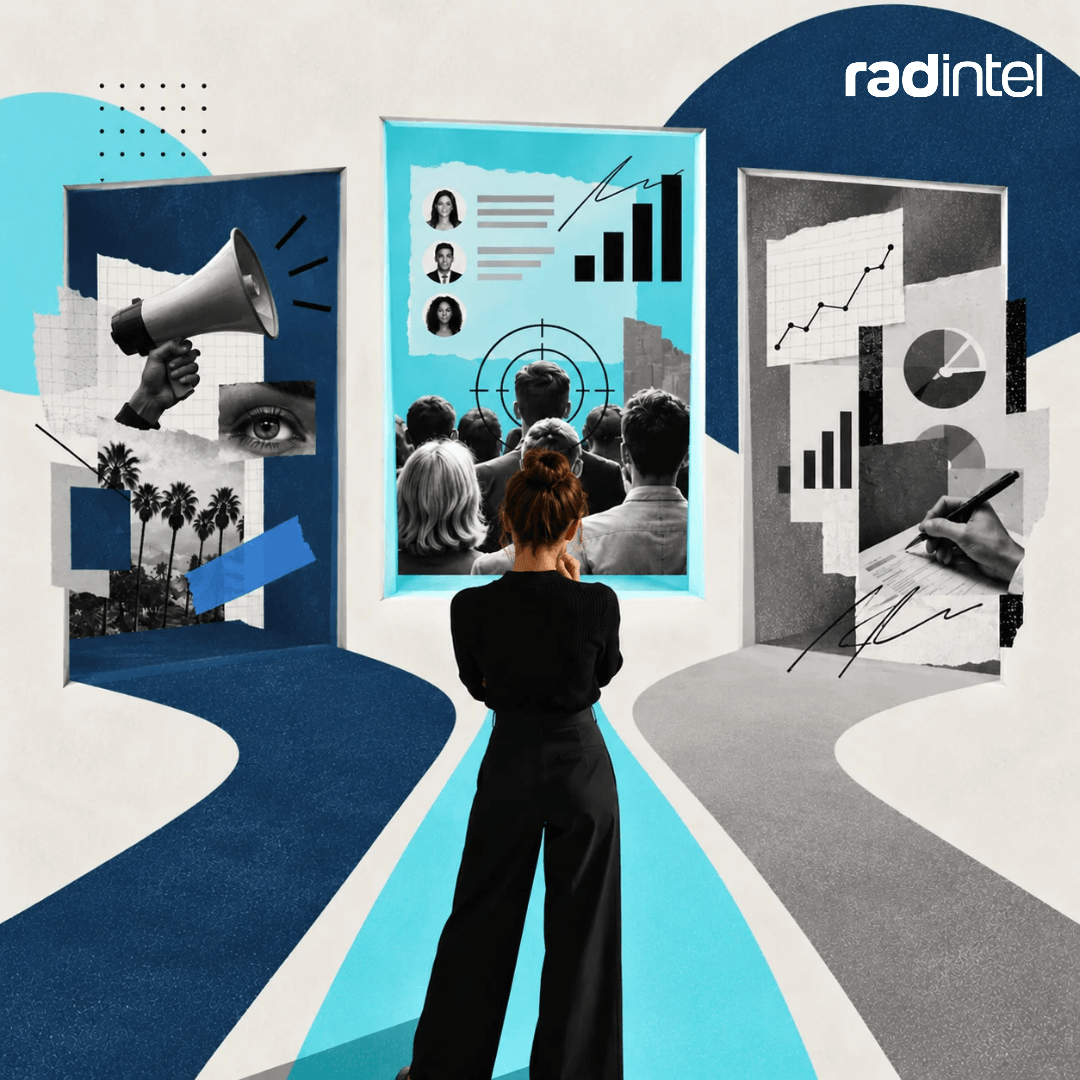

What becomes visible before everyone else notices?
Every trend has an awkward stage.
Before TikTok became a marketing channel, most people still saw it as an app where teenagers lip-synced and danced. Creators were still "just influencers," long before anyone saw them building companies, launching products, and shaping culture. And AI was something people argued about at developer conferences, not something executives felt they needed to understand.
We like to think great brands have crystal balls. Unfortunately, they don't. Their foresight often comes from something much more ordinary: paying close attention to audience behavior and seeing a pattern before everyone else agrees it's one.
For this issue, we wanted to see what that looks like in practice. So we looked back at three companies that caught meaningful audience patterns early, then turned to one that's still taking shape today.
The Owl Was Only the Beginning
Let's throw it back to 2022, when Duolingo's TikTok strategy was the one everyone in marketing was suddenly talking about. The headlines celebrated the mascot, the absurd humor and the willingness to be weird. Those are the unforgettable parts, but they don't explain why it worked.
At the time, the standard play was to advertise on TikTok: buy placements, run polished spots, treat it like another media buy. Duolingo started behaving like the creators people were already watching. Letting a mascot go feral was a pretty weird thing to do when you're heading toward the public markets, but it reflected a simple observation — entertainment was increasingly how people discovered things on TikTok.
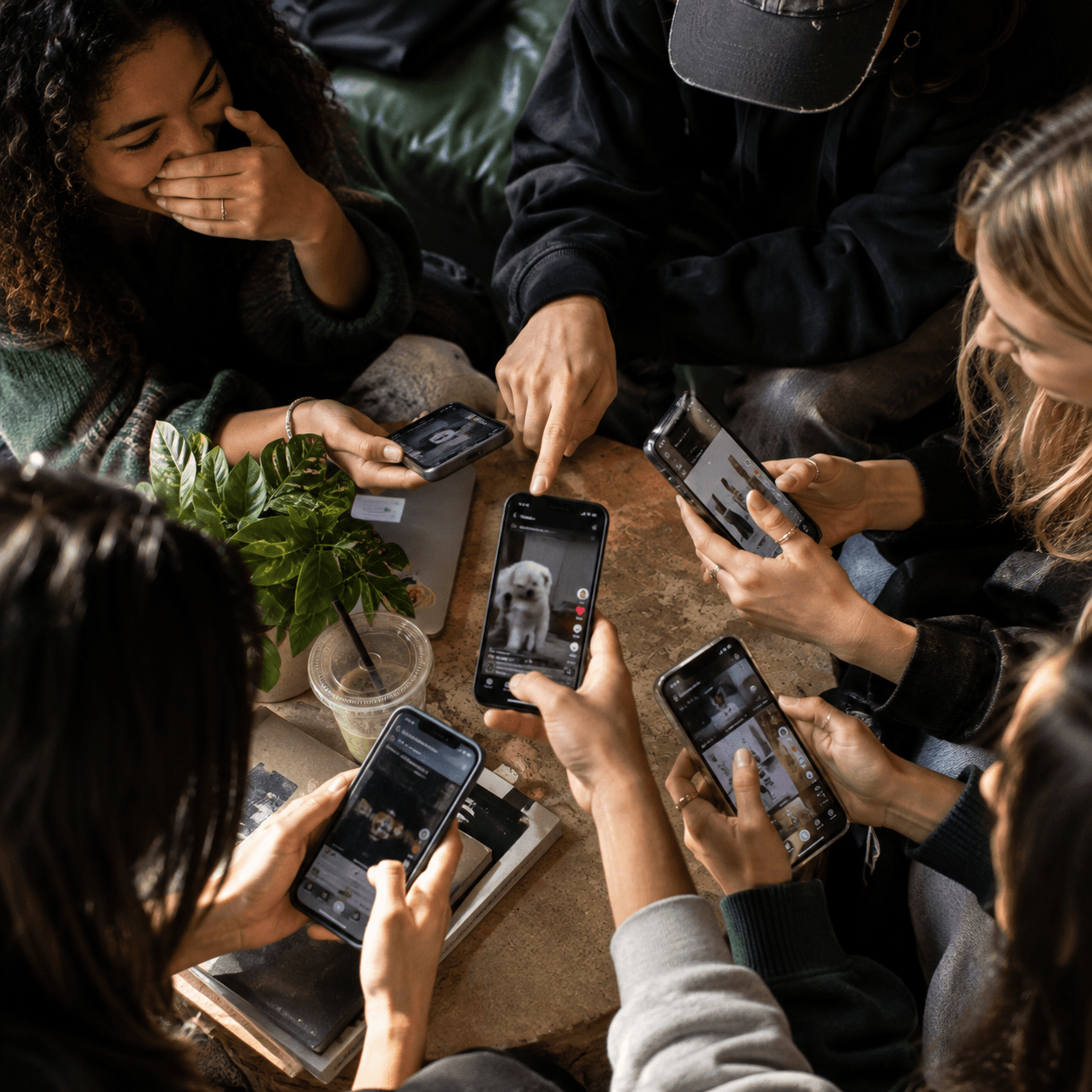
Run today's audience lens back over that moment and you start to see what Duolingo saw. Using RAD Intel's audience intelligence platform, one group stands out almost immediately: Meme-Native Gen Z. They discovered brands through TikTok, Reels and meme pages, then made content social by commenting, remixing and tagging friends.
Throughout this analysis, Behavioral Signals show how much more likely a specific audience is to engage in an activity compared with a selection of random people. An X148 signal, for example, means that audience is 148 times more likely to engage in that behavior.
Entertainment set the expectations for what earned attention. The mascot becomes a recurring character, comments turn into content, and viral trends fuel discovery. For many people, the relationship with Duolingo started long before they ever considered learning a language.
Before Wrapped Was a Ritual
Spotify Wrapped gets talked about like it's one of the best marketing campaigns ever created. I'd argue its real strength came much earlier, in the observation that made it possible.
By the time Wrapped launched in its modern form, people had already spent years posting screenshots of playlists, texting songs to friends, and debating albums online. Music had become part of how people expressed themselves, carrying language, culture, community, and personal history along with it. There was still no guarantee anyone wanted their listening data packaged up and broadcast. Plenty of "your year in data" recaps disappear without a trace. Apple Music has Replay. When's the last time you saw someone post theirs? Exactly.
Look back at the years before Wrapped existed and the behavior it would eventually capture is already there. One audience stood out for behaviors tied to sharing and self-expression: its members were 180 times more likely to share listening recaps, 137 times more likely to send playlists in group chats and 121 times more likely to engage with memes about music taste. Another audience used discovery itself as self-expression, with being early to an artist or song becoming part of their taste.
Wrapped gave those behaviors a format. Suddenly, a year's worth of songs told a story. Habits became graphics. Private listening became public identity.
That's why people wait for Wrapped every December: they're curious about what all that listening says about them.
Design Escapes the Design Department
Some shifts show up in the mundane parts of getting work done.
There was a time when design lived behind a request form. If you needed a presentation, you asked marketing. If you needed a flyer, you emailed the design team. If you needed a social graphic, you waited your turn.
Then design started showing up in everyone else's job. Recruiters made hiring graphics. Teachers built classroom materials. Startup founders made pitch decks. Small business owners designed ads between customer meetings.
The software category had spent years building for professionals while an enormous population of non-designers accumulated design responsibilities. Canva built for those people.
You can see that demand in the audience we'd call Side-Hustle Builders: entrepreneurs building businesses nights and weekends without professional branding budgets. Their Behavioral Signals show they're 180 times more likely to search for logo templates, 165 times more likely to create social media promotional content, and 148 times more likely to build proposals independently. Those behaviors look a lot like someone building a business.
The same need was spreading through organizations. Presentations, reports, recruiting materials, and campaign assets increasingly landed with people who had no design training at all. Canva gave them a practical way to do the work, then expanded with their responsibilities into presentations, whiteboards, documents, AI tools, and collaborative workspaces.
A recruiter making a hiring graphic or a founder building a pitch deck doesn't look like a market shift on its own. Put enough of those behaviors together, though, and you start to see what Canva saw.
Now, Let's Try It in Real Time
Alright, enough hindsight. Let's bring this into the present.
Most influencer marketing still begins with the creator. Teams evaluate reach, brand fit, and what's gaining traction, then make their selections from there. But the same creator can deliver extraordinary results for one brand and fall flat for the next depending on the audience behind them. Start there, and the opening question changes: whose audience already behaves like our customer?
To see what that question actually surfaces, we ran a test. We took a brand almost everyone files under a single life stage and asked our platform something deliberately naive: forget what the brand is known for and follow the behavior instead.
The brand was Perelel, a doctor-formulated women's vitamin company. Ask the market what Perelel is and the answer comes back instantly: prenatal. It's all over 'best prenatal vitamin' roundups and pregnancy subreddits. So we started with the obvious audience — research-driven women trying to conceive or early in pregnancy, comparing formulas and tracking cycles. It lit up exactly as you'd expect, with that audience 184 times more likely to search for doctor-formulated, trimester-specific prenatal vitamins. Strong, and completely unsurprising.
Then we ran a second description that never mentioned pregnancy at all: women in their late thirties to early fifties tracking hormonal changes, following functional-medicine and women's-hormone creators, researching ingredients, maintaining a daily supplement stack. A perimenopause-and-longevity audience — precisely the group nobody associates with a "prenatal brand."
It did more than just register. It matched.

Set the two audiences side by side and they become almost indistinguishable at the level that counts: life-stage-specific searching, comparing doctor-formulated products, scrutinizing ingredients and dosage, building a supplement routine and keeping it. Across both audiences, the same mindset keeps showing up: treating a hormonal life stage as a research project. Pregnancy happened to be where the market noticed it first.
The difference becomes clearer in the individual segments. The pregnancy segments were strong but uneven — one audience was 184 times more likely than the comparison group to engage in a relevant behavior, while another built around subscription convenience fell into the teens. The midlife segments were much more consistent, clustering around 148 times the likelihood of the comparison group. Our Predictive Performance Benchmarks compare the expected interaction of a specific segment with the baseline we'd expect from generic users of similar businesses, products or activities. These are expected outcomes rather than observed Perelel campaign results. Against those benchmarks, the two strongest segments in the study were midlife women, with expected click-through roughly 24% above baseline and expected conversion roughly 18% above baseline.
Here's the honest part. Perelel isn't ignoring these women — it already sells perimenopause and cycle-support products. What we found was more nuanced than a new market opportunity: a gap between what the market assumes a brand is and what its audience is already doing.
The category label says prenatal. The behavior points toward whole-life hormonal health, with some of the strongest expected performance concentrated at the midlife end. Audience-level analysis makes the size of that disconnect much easier to see.
That's the entire method in one example. The behavior underneath both becomes visible when you're willing to ask the naive question, often well before the market agrees it's worth asking.
And this doesn't stop with influencer marketing. You can see it in sports teams building entire ecosystems around their fans, retailers studying the communities around their customers, and media companies watching new audiences take shape in real time.
The common thread is, well, pretty simple. Behavior can tell us things demographics alone can't.
Of course age, income, and location still matter. But those characteristics rarely explain why people move together. Shared behaviors, identities, and interests do.
What Comes Before the Trend
Looking back at these examples, it's tempting to read foresight as prediction. But these companies were making decisions in the middle of the same messy markets, cultural changes, and technological uncertainty as everyone else. Their audiences gave them something more concrete to work with — behavior already unfolding in front of them.
By the time a trend makes its way into industry reports and keynote presentations, there's usually a long trail of behavior behind it. The earliest signs tend to be smaller. A niche community growing unexpectedly, a strange demographic overlap, an emerging behavioral pattern, or a group of customers using a product in a way nobody intended.
On their own, those observations may not look like much. But eventually, enough of them start pointing in the same direction.
Marketing loves to ask, "What's next?" Maybe we should spend a little more time asking, "What are people already doing that we haven't taken seriously yet?"
The answer usually arrives long before the headline does. And if we're paying attention, we might recognize it while everyone else is still deciding what to call it.